

Virginia City and Nevada City, Montana
Updated: February 20, 2026
Virginia City and nearby Nevada City in southwest Montana are two towns where you can still walk along wooden sidewalks and imagine life during the 1860s gold rush. Today, they are protected historic sites that show how gold, crime, courage, and many different cultures shaped early Montana.
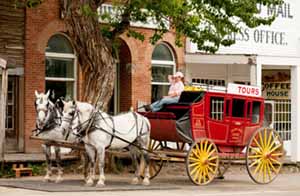
A Surprise Gold Strike at Alder Gulch
In May 1863, six miners traveling from Bannack were captured by a group from the Crow Nation on their way to look for gold near the Yellowstone River. After several days, the Crow released them on the condition that they not continue toward Yellowstone, so the miners turned back.
On the way home, they camped in a deep valley, or gulch, along a creek lined with alder trees-Alder Gulch. While looking for just a little gold to buy supplies, they instead discovered one of the richest placer (surface) gold deposits ever found in the Rocky Mountains.
They tried to keep the discovery secret, but news spread quickly, and within a few weeks a rush of people poured into the gulch and began building a new town called Virginia City. By that fall, between 7,000 and 10,000 people lived in and around Virginia City, making it one of the largest communities in the region.
Alder Gulch eventually produced more than 10 million dollars' worth of gold in 1800s money, which would be worth well over a billion dollars today, although estimates vary because of changing gold prices.
Learn a bit more about Virginia City.
A Boomtown That Survived
Like many gold rush towns, Virginia City started with tents, log cabins, and rough wooden buildings crowded along dirt streets. Miners formed their own mining districts, wrote rules, and elected officers to record claims and keep at least some order in the chaotic camp.
Unlike many other gold towns that became ghost towns when the easy gold ran out, Virginia City did not completely empty. Families and business owners decided to stay, building sturdier homes, hotels, and brick and stone public buildings they hoped would last for generations.
In 1865, Virginia City became the capital of the Montana Territory and was home to Montana's first newspaper, the Montana Post, and one of its earliest public schools. Montana's capital later moved to Helena, but Virginia City remained the county seat (government center) and a trade hub for ranchers and miners in the surrounding area.
Because people kept living there, its original 1860s buildings were never completely abandoned or rebuilt, which is one reason so many survive today.
Learn more detail about Virginia City.
Crime, Vigilantes, and What Historians Think Now
All that gold attracted criminals as well as miners. Stagecoaches carrying gold dust and travelers on rough roads between Bannack, Nevada City, Virginia City, and other camps were often robbed by "road agents," or bandits.
Robberies and murders scared many residents, and there was little formal law enforcement or court structure at first. Sheriff Henry Plummer served as sheriff at Bannack and was sometimes treated in older stories as the secret leader of a large outlaw gang called "The Innocents."
A key turning point came when a man named George Ives was accused of killing a well-liked young man, Nicholas Tabalt, near Nevada City; Ives was tried outdoors and hanged after being found guilty. In December 1863, citizens from several camps formed a secret Vigilance Committee, and its members' called "Vigilantes" hunted down suspected road agents, often hanging them without full legal trials.
Older books sometimes claimed the Vigilantes uncovered a huge, organized gang that had murdered more than 100 people, and they also claimed Plummer definitely led it. Modern historians who study original letters, court records, and newspapers find far less clear evidence for such a large, well-organized gang or for Plummer's role as its boss.
Many experts agree that some men the Vigilantes hanged were probably violent criminals, but there is now serious debate about how many were truly guilty and whether the Vigilantes sometimes went too far or used weak evidence. This more careful view helps students see that history is not just heroes and villains, but also questions and new discoveries.
The Vigilantes used the numbers "3-7-77" as their symbol, painting or posting it as a warning, though historians are still not sure exactly what the numbers meant. Whatever its meaning, people who saw "3-7-77" on their property often left town quickly, and today the Montana Highway Patrol badge still includes those numbers, showing how strongly the vigilante stories remain part of the state's identity.
Learn more about vigilante justice.
Gold, Stagecoaches, and the Wider World
The gold taken from Alder Gulch did not stay in Virginia City. Miners brought their gold dust to local assayers, who tested it for purity and melted it into bars or coins.
Stagecoach companies, including Ben Holladay's Overland Mail and Express and later Wells Fargo, carried gold, mail, and passengers along rough roads to connect Montana with the rest of the United States. Stagecoach travel was slow, crowded, and uncomfortable, with long stretches between roadside stops and difficult winter journeys through deep snow.
Historians estimate that millions of dollars- worth of Montana gold left the territory by stagecoach and steamboat, helping to build banks and businesses far beyond Montana. By 1869, when the first transcontinental railroad was completed, long-distance travel and shipping began to shift from stagecoaches to trains, which were faster and safer.
Learn more about stage coaches.
Miners from Around the World
Gold in Alder Gulch drew people from many places, including the eastern United States, Europe, and China. Most Chinese immigrants who reached Montana came from the Kwangtung Province of China and had first worked in California before moving inland as new strikes appeared.
Many were poor and had left overcrowded, troubled areas, hoping that "Gum San," or the Land of Golden Mountains, would offer a better life. By 1870, nearly 2,000 Chinese people lived in Montana-about one in ten residents-and several hundred lived in or near Virginia City.
Because many new mining claims were closed to them, Chinese miners often reworked abandoned placer claims, using organized group labor to recover gold that earlier miners had missed. They built a Chinatown at the lower end of Wallace Street and a two-story temple called the Joss House, which served as both a religious and social center.
Chinese community organizations, sometimes compared to guilds or lodges, created rules like "Do not occupy by force the property of your brethren" to keep order. At the same time, Chinese residents faced harsh discrimination, extra taxes, and violence, and their numbers declined as mining changed and anti-Chinese laws spread in the West.
Recent historical research and preservation work, including a rebuilt Joss House, now help visitors understand how important Chinese Montanans were to places like Virginia City and Nevada City.
Learn more about Chinese immigrants in Montana
New Mining Methods and Lasting Scars
At first, miners in Alder Gulch used simple placer methods, such as panning and rocker boxes, to wash gold from creek gravel. These methods relied on the fact that gold is heavier than most other materials, so it tends to settle in the bottom of pans and sluice boxes.
As easy-to-reach gold became scarce, mining companies turned to more powerful methods: hydraulic mining with high-pressure water hoses, dredge mining with floating machines that chewed up creek bottoms, and hard-rock mining that followed gold-bearing veins deep into the mountains.
These methods produced more gold but were costly and caused long-lasting damage to streams and hillsides, leaving behind tall piles of gravel called tailings that can still be seen along Alder Gulch today.
Geologists now understand that Montana's gold formed millions of years ago when hot, mineral-rich fluids moved through cracks in the rocks and later eroded into streams, concentrating placer deposits like those at Alder Gulch and Bannack. This scientific view helps explain why some gulches became very rich while nearby areas did not.
Learn more about mining techniques.
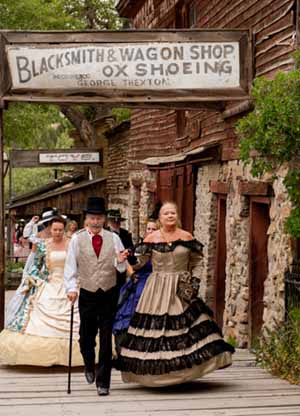
Saving Virginia City and Nevada City
By the early 1900s, Virginia City's population had dropped sharply, and by the 1940s many buildings in Virginia City and Nevada City were run-down or abandoned. In 1945, a man named Charles Bovey began buying historic properties in the area because he believed they were worth saving.
He repaired buildings in Virginia City and moved threatened historic structures from around Montana into Nevada City, turning it into a kind of outdoor museum of pioneer architecture. The Bovey family managed Virginia City and Nevada City for decades, adding collections like antique music machines and helping to make the towns popular tourist sites.
In 1997, the State of Montana purchased most of the historic core of both towns to keep them from being broken up and to protect them for the public. Today, Montana Heritage Commission staff work with historians, archaeologists, and preservation experts to maintain the buildings, carefully repair them, and interpret the stories they tell.
Visitors can now ride a short train between Virginia City and Nevada City, watch living-history performances, pan for gold, and explore original and relocated buildings that show how people once lived and worked. The towns are also important for modern research: archaeologists and historians study artifacts, building materials, and old documents there to better understand daily life, immigration, mining technology, and community change in the 1800s American West.
Virginia City and Nevada City remind us that history is not just a set of legends about vigilantes and outlaws, but also a story of families, workers, immigrants, and decisions about what is worth saving.