

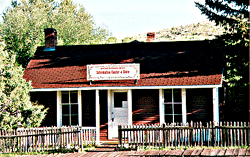
Leviathan Hall: A Giant Frontier Hall
In 1863, J. A. Nelson built a large wooden meeting hall on Wallace Street called Leviathan Hall, named after a giant sea creature because it was so big for a mining town-about 28 feet wide and 100 feet long. It hosted community events such as dances, meetings, and traveling entertainments for the fast-growing mining camp at Alder Gulch.
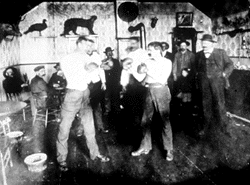
On January 2, 1865, Leviathan Hall held one of the most famous bare-knuckle boxing matches in American frontier history. Saloon owner and veteran fighter Con Orem, about 138 pounds, faced Irish miner Hugh O'Neil, about 190 pounds, in a fight that lasted roughly 185 rounds over more than five hours before the referee declared it a draw.
Sports historians reviewing detailed round-by-round reports in the Montana Post now call it the "longest documented bare-knuckle fight" in the United States.
That same year, Leviathan Hall played another important role during the "flour riot" of 1865. Heavy snows blocked freight roads into Virginia City, flour became scarce and expensive, and a group of worried residents searched homes and businesses to collect flour before some families ran out.
They stored at least 80 sacks of flour in Leviathan Hall and later redistributed it, with a committee promising to repay the original owners, showing how people tried to keep the town from falling into real hunger and chaos.
From Hall to House: Julius Kohl's Home and Shop
Leviathan Hall was torn down around 1868, as Virginia City's gold-rush boom faded and the town changed. By 1875 the lot held a smaller one-story building instead of the huge hall.
Around 1875-1878, carpenter and cabinetmaker Julius Kohls (often spelled Kohl) bought the lot and built the log house that still stands there today. He ran his carpentry and lumber business across Wallace Street and used the new T-shaped log building both as his home and as a workshop where he made and repaired furniture and other woodwork for the town.
Records from the Montana Heritage Commission and local histories show that Kohls lived in the house until about 1920. After Julius moved out, the house was rented to different tenants for a time.
In the 1920s, "Aunt" Julia Elledge, the daughter of early Virginia City resident Lucien Romey, moved in and lived there until the 1950s. Neighbors remembered her warmly, and the house eventually became known as "Aunt Julia's" in her honor.
Aunt Julia's Today
Today, Aunt Julia's is preserved as part of historic Virginia City, with its original-style picket fence and log walls helping visitors imagine how a craftsman's home might have looked in the late 1800s. A plaque and walking-tour materials explain that this quiet house sits on the former site of Leviathan Hall, connecting the building to both famous events like the Orem-O'Neil fight and everyday stories of miners, shopkeepers, and families.
Historians such as John D. Ellingsen and staff from the Montana Historical Society have used building records, structural studies, and historic newspapers to date the house, confirm its link to Julius Kohls, and document Aunt Julia Elledge's long residence there.
Their research shows how a single spot in a small Montana town can tell many layers of history-from noisy prizefights and flour riots to the quieter lives of a carpenter and a beloved "Aunt" who helped keep Virginia City a living community rather than a forgotten ghost town.