

Life in a Gold-Rush Town
Virginia City, Montana, grew quickly after gold was discovered in Alder Gulch in 1863, bringing thousands of people hoping to strike it rich. Wallace Street became the main business street, lined with wooden buildings that held shops, hotels, and restaurants serving miners and their families. At its peak, Virginia City had more than 10,000 people and even became the capital of Montana Territory for a time. The small lot next to what is now the Fairweather Inn was part of this busy scene and helps tell how the town changed over many decades.
Early Shops in the 1870s
Not all the early tenants in the small buildings on this lot are known, but in 1873 a man named A. LaCroix ran a shoe store next to the spot where the Fairweather Inn stands today. At the same time, Thomas White operated a barber shop in the east building, offering haircuts and shaves to miners and townspeople. A medical doctor, E. T. Yager, M.D., also used space in the east building in the 1870s, showing that health care and grooming were important services even in a rough mining town. These small businesses helped turn Virginia City from a temporary mining camp into a more organized community with regular town life.
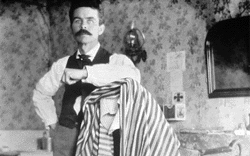
The Barber Shop in 1903
By 1903, a barber named John Chambers was running a barbershop in the same location on Wallace Street. Barbershops in western towns were more than just places to get a haircut; they were social gathering spots where men met to talk about local news, mining, and politics. The fact that a barbershop stayed on this lot over many years shows how important this corner of town remained for everyday life in Virginia City.
From Small Shops to a Mining Dormitory
In the 1920s, the two small shop buildings, including the old barber shop space, were torn down. A company called Humphrey?s Gold Corporation, which used large dredges to scoop and wash Alder Gulch gravels for leftover gold, built a dormitory on the site for its workers. This change shows how mining in the area shifted from individual miners with simple tools to big companies using powerful machines and employing many workers. Even after the storefronts disappeared, the lot stayed closely connected to the gold industry that had created Virginia City.
Becoming Part of the Fairweather Inn
In 1935, Humphrey?s Gold Corporation sold the Anaconda Hotel and its nearby properties, including the dormitory east of the hotel, to new owners. The Anaconda had grown from an earlier eating house and meat market into a hotel and saloon that served food and drinks to locals and visitors. Later, Charles and Sue Ford Bovey bought the Anaconda in the 1940s and remodeled it to look more like an early Montana hotel, lowering the high ceiling, adding a second floor, and giving the dormitory a ?new old? front so it matched the historic street. The updated hotel was renamed the Fairweather Inn to honor Bill Fairweather, one of the men who discovered gold at Alder Gulch in 1863, and the old dormitory became part of this historic inn.
Saving Virginia City?s History
By the mid-1900s, Virginia City was known as a ghost town and historic site, and people began working to preserve its buildings so visitors could see what a gold-rush town looked like. The Fairweather Inn and nearby structures along Wallace Street became part of this effort to protect and share Montana?s early history. Historians, architects, and local experts studied old records, photographs, and buildings to better understand who lived and worked on this lot and how it changed over time. Today, students and tourists can walk down Wallace Street, see the Fairweather Inn, and imagine the shoe store, doctor?s office, and lively barber shop that once stood on the same ground.
Acknowledgements
Special thanks go to researchers and historians who have helped uncover and explain this history, including John D. Ellingsen, John N. DeHaas, Tony Dalich, Ken Sievert, Tom Cook, and Ellen Baumler of the Montana Historical Society. Their careful work has helped ensure that the story of Virginia City?s barber shop and the Fairweather Inn is accurate, engaging, and accessible for students.