

20. Lolo Pass
Updated: March 3, 2026
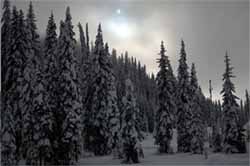
Lolo Pass and the Lolo Trail are now described a bit differently by historians than in older, more dramatic tellings, but they are still seen as one of the hardest parts of the journey for the Corps of Discovery.
Lolo Pass. The route Lewis and Clark followed across the Bitterroot Mountains was part of an old Nez Perce trail system that Native peoples had used for many generations to travel between the mountains and the plains to hunt, trade, and visit relatives, not only for buffalo but for many kinds of resources. In September 1805 the Corps expected this mountain crossing to take about five days, but deep snow, steep ridges, and fallen trees turned it into an 11-day struggle over roughly 120-200 miles of rough country, guided by their Shoshone leader Old Toby. The men wrote about narrow, dangerous side-hills where horses slipped and sometimes fell, though modern historians do not find clear proof that any horse actually tumbled 300 feet at one time.
Food was a serious worry on this part of the trail. The captains and the Nez Perce had warned that game would be scarce on the high ridges, and hunting really was difficult in the cold, forested mountains. The Corps ate what they had carried-such as dried meat, "portable soup," and tallow-and sometimes butchered a horse when they could not find other food, but the strongest recent research suggests they did not literally live on candles and grease alone the whole way. Many men reached the western side of the mountains very weak and hungry, and after they came down to Nez Perce villages on the Clearwater River they suddenly ate large amounts of salmon and camas root, which made "nearly all the men sick" for several days as their bodies adjusted. Only after resting and recovering there did they build canoes on the Clearwater and Snake rivers and begin floating toward the Columbia, a process that started in late September after they had been fed and helped by Nez Perce families.