

Grizzly Bears
Updated: February 23, 2026
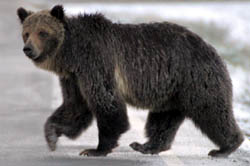
Grizzly bear, scientific name Ursus arctos horribilis, is probably the most terrifying and awe-inspiring animal in Montana. They have been the subjects of legends for centuries. When standing on their hind legs grizzlies are often over six to eight feet tall, can be three to four feet at the shoulder, and adult males commonly weigh 400 to 700 pounds, with some bears topping 800 pounds or more. The grizzly's distinctive features include humped shoulders, a long snout, long curved claws and a silvery back. The humped shoulders are actually a mass of muscle. In spite of their massive size this bear is very agile and can run at speeds of up to about 35 mph-faster than an Olympic sprinter. They get their name from the grizzled look of their long guard hairs having white tips on their back and shoulders. Being at the top of the food chain, adult grizzly bears have little to fear from other wild animals, although they still must work hard to find enough food and avoid conflicts with people.
Grizzlies are omnivores, meaning they eat both plants and other animals. Their diet varies by the season and includes grasses, roots, berries, nuts, fish and rodents. Aided by their long front claws and massive shoulder muscles, grizzlies are excellent diggers, clawing up roots, bulbs, and ground squirrels. Grizzlies also eat a great deal of insects, sometimes tearing rotten logs apart and turning over heavy stones in search of ants and beetle larvae. They sometimes prey on large mammals such as elk calves, deer, or carrion from winter-killed animals; in some places and years, meat can be a big part of their diet, while in others it is closer to 10-20 percent, depending on what foods are available. Storing up a lot of body fat is important for the bears to survive hibernation, especially for a female who will give birth to cubs; in late summer and fall, a grizzly may eat the equivalent of tens of thousands of calories a day, almost like a competitive eater in fur.
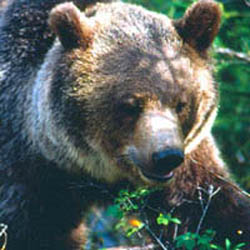
Early in the fall grizzly bears begin looking for a proper place to dig their dens for hibernation, and may travel many miles before finding a comfortable winter home. Generally they seek a high mountain slope where a blanket of deep snow will cover their den and serve as insulation until spring. Grizzlies often dig beneath the roots of large trees or into steep hillsides to create their dens.
Female grizzly bears breed when they reach maturity at about 4 to 7 years old. She will mate between May and July. The young won't be born until January or February because the fertilized egg does not begin to grow until November; this is called delayed implantation. Females will have one to three cubs in early February while hibernating in their winter dens and will wait for spring before they come out and eat again. The female will not breed again until her cubs are on their own, usually every 2 to 3 years.
Grizzly cubs are born blind, toothless, almost hairless, weighing 1-2 pounds and just about eight inches long. The cubs will remain in the den with their mother until April or May; by that time the cubs may weigh around 20 pounds and are ready to tumble out into the snow. Grizzly cubs may fall prey to mountain lions, wolves, and other bears if they stray too far from their mother. They will stay with their mother from 2 to 4 years and she will teach them how to survive-what to eat, where to find food at different seasons, and how to avoid danger.
The destruction and breaking up of bear habitat has led to smaller numbers of bears in many parts of their historic range. People have built roads, houses, farms and mines where bears used to live, reducing and fragmenting their natural habitat. Until recent years saving ecosystems and the creatures that live in them was not important to many people. In the past much of the culture in the United States saw nature as something to be tamed or defeated. Research and education have led many people to re-examine their attitudes toward the grizzly bear, and scientists now track bears with GPS collars and DNA hair samples to understand where they travel and which areas most need protection.
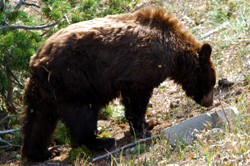
In the past people killed bears for meat, fur and trophies. It is now illegal to kill grizzlies in the continental United States except in very limited, special-permit cases such as self-defense or approved management actions. They have been protected under the Endangered Species Act since 1975 and are currently listed as a threatened species in the lower 48 states, although federal officials are now reviewing whether some populations should be removed from the list because they have grown. During the 1800s, it is estimated that around 50,000-100,000 grizzly bears inhabited North America from the Mississippi River to the Pacific Coast. Today, instead of only about 800 grizzlies in Montana, biologists estimate there are roughly 1,000 or more bears in the Northern Continental Divide Ecosystem (centered on Glacier National Park) and another 900-1,000 in and around the Greater Yellowstone Ecosystem, with smaller numbers in other mountain ranges-meaning Montana now has well over a thousand grizzlies and their range is slowly expanding eastward.
Many bears live in Montana and many people enjoy the outdoors, but surprisingly few people ever see bears up close in the wild. Still there are a few things you can do just to be careful. Most bears tend to avoid people, so make noise-talk loudly, sing camp songs or use bells-to announce your presence, especially in thick brush or near noisy streams. If you do meet a bear, stay calm, speak in a low voice, and move slowly away while facing the bear; do not run, because running can trigger a chase.
Clean camps are essential to reduce bear encounters. The smell of food and trash attracts bears because they have an excellent sense of smell-much better than a bloodhound's. Keep your dishes, clothing and campsite clean. Keep cooking and sleeping areas of your camp separate and store food in airtight containers, bear-resistant canisters, or properly hung from a tree at least 10 feet off the ground and 4 feet from the trunk, as current guidelines suggest. When kids learn to carry bear spray with adults, help with keeping a "no-crumbs" campsite, and remember to make noise on the trail, they become part of the success story that is helping grizzly bears and people share Montana's wild country more safely.