

Steamboating on the Missouri River
Updated: February 24, 2026
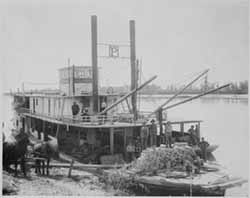
Before Steamboats: A Wild River Highway
For thousands of years, Native nations traveled the Missouri River by canoe and bullboat, using it as a water highway for hunting, fishing, and trade.
When fur traders and U.S. Army explorers such as Lewis and Clark came in the early 1800s, they used keelboats and other human-powered craft that had to be pushed, poled, or pulled upstream against strong currents.
The Missouri earned nicknames like “Big Muddy” because of its brown, silty water and twisting, ever-changing channel, which made upstream travel slow and dangerous.
Steamboats Reach Fort Benton
Steamboats began working their way up the Missouri River in the 1820s, but only a few early trips tried to go far into what is now Montana.
The first steamboat to successfully reach Fort Benton, the practical “head of navigation” on the upper river, was the Chippewa, which arrived from St. Louis on July 2, 1860, followed soon after by the Key West.
Before the 1860s, only a handful of steamboats ever made it that far, but gold discoveries in the northern Rocky Mountains soon increased demand for freight and passengers.
Over the next few decades, hundreds of steamboats docked at Fort Benton, with the busiest years in the 1870s when the gold and fur trades were booming.
Fort Benton: “Head of Navigation”
During the gold-rush and fur-trade years, Fort Benton became Montana’s busiest river port and commercial center. Goods traveled more than 2,000 river miles from St. Louis to Fort Benton.
From there, freight companies used wagon trains to haul tools, food, and equipment to mining towns such as Bannack, Virginia City, and Helena.
U.S. and Canadian traders, several Native nations, and settlers all depended on steamboats for supplies and mail in an era before railroads and highways reached Montana.
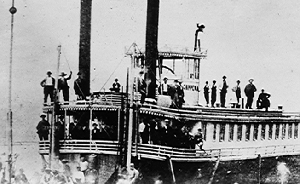
"Mountain Boats" Built for Shallow Water
The upper Missouri was too shallow and twisty for many large, fancy steamboats used back east, so boat builders developed lighter “mountain boats” for Montana’s rivers.
These vessels were usually about 140–170 feet long and around 30 feet wide, with shallow hulls, broad decks, and a “spoon-bill” bow that helped them skim over sandbars in water sometimes only waist-deep.
A single trip could carry roughly 200 tons of cargo upstream, along with passengers and crew, and a successful run to Fort Benton could earn profits greater than the boat itself cost, even though the journey often took two to three months.
Life and Danger on Board
Steamboat crews included pilots and captains who knew the river’s hidden channels, mates who supervised deckhands, and roustabouts who did hard physical labor.
Roustabouts helped push boats off sandbars, loaded and unloaded cargo, and worked long hours in all kinds of weather.
Firemen tended the boilers and watched for leaks or fires; early steamboats sometimes exploded when boilers failed or overheated, so this job required constant attention and short shifts.
Despite hazards such as snags, shifting sandbars, ice, and mechanical problems, owners kept sending boats upriver because gold-rush freight and passenger fares could bring huge profits.
The End of the Steamboat Era
Steamboat traffic on the upper Missouri peaked in the 1860s and 1870s but declined as railroads reached Montana in the 1880s and offered faster, more reliable, year-round service.
By around 1890, regular steamboat travel to Fort Benton had ended, and trains and, later, highways took over most long-distance transportation.
Today, the upper Missouri near Fort Benton is a National Wild and Scenic River, and canoeists and rafters can still see some of the same cliffs, islands, and bends that steamboat crews once navigated.