

Wibaux Museum
Updated: February 6, 2026
Visit the home and gardens of a French cattle rancher who helped shape eastern Montana.
Who Was Pierre Wibaux?
Pierre Wibaux (1858-1913) was a French immigrant who became one of the largest open-range cattle ranchers in the United States during the late 1800s. He left his family's textile business in France in 1883, traveled to Chicago to study the cattle industry, and then moved west to start a ranch along what was then called Beaver Creek in eastern Montana and western North Dakota. By the 1890s, brands from his W-Bar ranch were on tens of thousands of cattle-estimates range from about 40,000 to more than 60,000 head-which helped make the town of Wibaux an important cattle-shipping point on the Northern Pacific Railroad.
Like many ranchers, Wibaux suffered heavy losses during the harsh winter of 1886-1887, when historians estimate that roughly 70 percent of open-range cattle in the region died. Instead of giving up, he borrowed money in France and bought sturdy surviving animals from nearby ranchers, then experimented with growing alfalfa for winter feed, which helped him rebuild his herds. Later, when homesteaders fenced the land and large open-range ranching became harder, Wibaux invested in banking, mining, and other businesses in Montana and beyond. He died in 1913, but his ashes were brought back to Montana and buried beneath his statue in the town that bears his name.
The Museum and Its Buildings
The town and county of Wibaux are both named for Pierre, and the Pierre Wibaux Museum helps tell his story and the story of the community. The museum is centered on his former office and house complex in downtown Wibaux, where he once planned ranching and business operations. Inside, visitors can see antiques that belonged to Pierre and his wife Mary Ellen (Cooper) Wibaux, as well as objects donated by early settlers and ranch families from the area. Photos, tools, and household items help students picture what life was like on the open range and in a small cattle town more than 100 years ago.
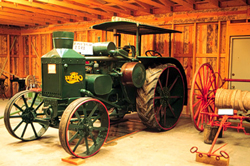
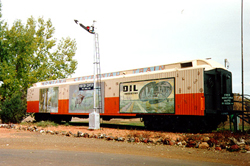
The museum complex also includes several historic-style buildings and exhibits. An antique barber shop recreates a turn-of-the-century grooming business, with a classic barber chair and a display showing what an early indoor bathroom might have looked like in the region. A livery stable holds wagons, early tractors, and ranch tools that show how people moved freight and cared for animals before trucks and paved roads. One especially eye-catching feature is a Montana Centennial Train Car that traveled to the 1964-1965 New York World's Fair, now used to display Montana memorabilia and rare artifacts.
Wibaux Park and Gardens
Surrounding the museum is Wibaux Park, a green space that reflects Pierre's love of carefully planned gardens. Historical descriptions note that he brought a gardener from France to design and tend his grounds, which once included grassy lawns, arbored vines, and flowers. Today, tall cottonwood trees shade the park, and seasonal plantings of lilacs, poppies, hollyhocks, snapdragons, and other flowers add color from spring through fall. Walking paths and benches give visitors places to rest and enjoy the setting near Beaver Creek.
One special feature in the garden is a rock grotto made from native stones such as agate, petrified wood, and lava rock. In the grotto, a fountain featuring a sculpted woman and children provides the gentle sound of running water, creating a quiet spot for reflection. Together, the park, statue, grotto, and museum buildings help visitors imagine how a French rancher blended European-style gardens with the wide, open landscapes of the northern Plains.
Visiting Today
The Pierre Wibaux Museum complex sits in downtown Wibaux at 112 East Orgain Avenue, just off Highway 7 and a few miles west of the Montana-North Dakota border along Interstate 94. Nearby, visitors can take a self-guided historic walking tour of the Wibaux business district, see Old St. Peter's Catholic Church (begun in the 1880s and enlarged in 1931), and view the larger-than-life statue of Pierre Wibaux where his ashes are buried. The museum is generally open seasonally from late spring through early fall; admission is free, with donations welcomed to help care for the buildings and gardens.
For students, the site offers a chance to see how one immigrant's choices affected landscapes, businesses, and people on both sides of the Atlantic. By exploring the museum, train car, park, and nearby church and statue, visitors can connect big topics-like ranching, immigration, boom-and-bust economies, and town building-to a real person and a real place in eastern Montana.