

Updated: February 6, 2026
Historical Museum at Fort Missoula
Explore more than 160 years of Missoula's history at a 32-acre historic fort turned museum park.
Homelands and Early Missoula
The Missoula area lies within the ancestral homelands of the Bitterroot Salish people, who, along with other Salish, Pend d'Oreille, and Kootenai communities, have lived in this region for thousands of years. Place names, traditional trails, and archaeological evidence show that Native peoples used the valleys and river crossings around present-day Missoula long before any European American settlement. The word "Missoula" comes from a Salish term often translated as "near the cold, chilling waters," referring to the fast, cold river that passes through the valley.
In 1860, entrepreneurs C. P. Higgins and Francis Worden opened a trading post at a small settlement called Hell Gate, a few miles west of where downtown Missoula is today. They chose this spot because it sat along travel routes used by Native peoples and fur traders, making it a natural place for commerce. As more people arrived, they later moved their milling and business operations closer to a better water-power site on the Clark Fork River, helping start the town site that would become Missoula.
How Missoula Became a Town
The search for gold in the 1860s and the completion of the Mullan Road in 1863 brought more travelers and settlers through the Missoula Valley. The Mullan Road connected Fort Benton, Montana, to Walla Walla, Washington, making it easier for wagon traffic, goods, and mail to move across the Northern Rockies. As traffic increased, Missoula grew from a trading post into a permanent town that served miners, ranchers, and loggers in western Montana.
Several key developments helped Missoula become a strong community. In 1877 the U.S. Army established Fort Missoula just southwest of town, providing a military presence and jobs. In 1883, the Northern Pacific Railroad reached Missoula, the same year the town was officially incorporated as a city, turning Missoula into a shipping and trading center for grain, lumber, and other products from the Bitterroot Valley and surrounding areas. The University of Montana opened in 1895, and in 1908 Missoula became a regional headquarters for the U.S. Forest Service, which later helped develop smokejumper training and the Aerial Fire Depot for fighting wildfires.
About Fort Missoula
Fort Missoula was founded in 1877 as a military post to protect transportation routes and to project U.S. power in the region during a time of tension and conflict with Native nations. Over the years, the fort housed different units and served changing purposes, including training soldiers, supporting forest fire work, and holding people during wartime. One famous experiment at the fort was the 25th Infantry Bicycle Corps, an all-Black unit organized in 1896 to test whether bicycles could be useful for military travel over rough terrain.
During World War II, sections of Fort Missoula were used as an "Alien Detention Center" where Italian seamen and Japanese and Japanese American civilians and resident aliens were held under government orders. Exhibits at the museum and signs around the grounds discuss these internments, helping visitors understand how fear, war, and prejudice can affect people's rights. Today, only some of the original Army buildings survive, but they are part of a historic district listed on the National Register of Historic Places.
The Museum Today
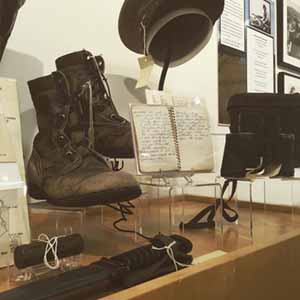
The Historical Museum at Fort Missoula was created in 1975 when community members worked to save historic fort buildings and tell the story of Missoula County. The museum sits on about 32 acres at the core of the old fort and functions as both a museum and a public park. Its collections include more than 50,000 artifacts, photographs, documents, and other objects related to Missoula County, Fort Missoula, and western Montana's timber and wood-products industries.
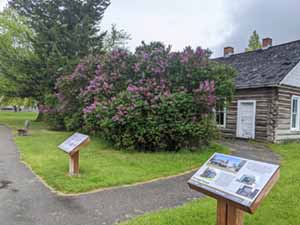
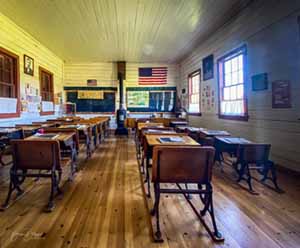
More than 20 preserved historic buildings and structures stand on the grounds, including barracks, officers' quarters, a schoolhouse, a church, logging equipment, and railroad and timber-industry structures. Trails and outdoor signs help visitors walk from building to building while learning how people lived, worked, went to school, worshiped, and did business in different eras. Because it is the only major history museum in western Montana, the Historical Museum at Fort Missoula plays an important role in helping residents and visitors connect local stories to state, national, and world history.
Special Stories at the Fort
One of the museum's best-known exhibits tells the story of the 25th Infantry Bicycle Corps, the African American soldiers who tested military bicycles on long-distance rides from Fort Missoula in the 1890s. These soldiers rode hundreds and then more than a thousand miles over mud, gravel, and mountains, keeping careful records that historians still study today to understand both technology and race relations in that era. Another major theme explores the World War II internment and detention center at Fort Missoula, where Italian and Japanese internees built community under difficult and unfair conditions.
Other exhibits focus on logging and sawmills, the wood-products industry, and firefighting in western Montana's forests. Historic buildings like St. Michael's Church-often described as one of the oldest surviving buildings in Missoula County-show how early residents built gathering places that combined local materials with European-style designs. Together, these stories help students see that history includes both inspiring achievements and painful events, and that museums have a responsibility to share "warts and all" so people can learn from the past.
Programs and Field Trips
The Historical Museum at Fort Missoula offers many programs for both adults and children, including workshops, family days, homeschool programs, lectures, and themed festivals. Popular annual events include the "Fourth at the Fort" Independence Day celebration, Forestry Day, and harvest-themed programs that show traditional skills and games. The museum's education department also creates traveling "education trunks" and outreach programs that teachers can borrow or schedule for their classrooms.
During the summer, the museum runs History Camp for ages 8-12 and a Junior Docent program where older students can learn to help lead tours and activities while earning service hours. Staff regularly guide tours on topics such as Missoula County history, Fort Missoula's role in the military, the World War II detention center, and the 25th Infantry Bicycle Corps. By walking through real buildings and seeing original objects, students can connect what they read in textbooks to the places where history actually happened.
Visiting the Museum
The museum is open year-round, with hours that change by season. From Labor Day weekend to Memorial Day weekend, it is typically open Tuesday through Sunday from 12:00 p.m. to 5:00 p.m., and closed on Mondays. From Memorial Day weekend through Labor Day weekend, the museum stays open longer, with hours usually 10:00 a.m. to 5:00 p.m. Monday through Saturday, and 12:00 p.m. to 5:00 p.m. on Sunday. The historic grounds outside are open every day and are free to walk, making the site a popular place for picnics, walking, and informal learning.
Outbuildings are generally open April through November during regular museum hours, and the museum is closed on most major holidays except the Fourth of July. A small admission fee helps support care of the buildings and collections, while the research library is open by appointment for students and researchers who want to study original documents. For sixth-grade students, a trip to the Historical Museum at Fort Missoula offers a chance to stand inside real barracks, classrooms, and churches while learning how Missoula's past continues to shape the community today.