

Charles M. Bair Museum
Explore the story of a Montana sheep rancher, his family, and their amazing home filled with art and history.
Who Was Charles M. Bair?
Charles M. Bair (1857-1943) was a Montana sheep rancher, investor, and businessman who became one of the most successful sheep owners in the world. He was born in Ohio and came to Montana in 1883 to work as a conductor on the Northern Pacific Railroad, just as the railroad was helping connect the West to the rest of the country. Like many Americans of his time, Bair hoped the West would offer new chances to work hard, take risks, and build a better future for his family. Over his lifetime, he became known not only for ranching but also for his friendships with famous people such as humorist Will Rogers and Crow leader Chief Plenty Coups.
Ranching, the Gold Rush, and Wealth
Bair first entered the ranching business in the 1890s, running sheep near Lavina, Montana, and later on the Crow Reservation near Hardin. In 1898 he sold his flock and headed to the Klondike region during the Alaska-Yukon Gold Rush, but instead of digging for gold himself he invested in a machine that helped thaw frozen ground so miners could reach the pay dirt more easily. This smart business decision made him a millionaire, and when he returned to Montana he bought and expanded large sheep ranches, eventually running as many as 300,000 sheep and shipping a trainload of 1.5 million pounds of wool to Boston in 1910. With the money he earned from wool and the Gold Rush, Bair also invested in oil, coal, mining, banking, and real estate, making him an important figure in Montana's growing economy.
The Bair Family Home and Museum
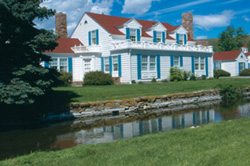
In the early 1900s, Bair bought the John Grant Ranch near Martinsdale, Montana, which became the main family ranch. The Bair home on this ranch was first built in 1913, and over the years the family added rooms until the two-story house had 26 rooms and about 11,000 square feet of living space by 1936. Today this large ranch house is preserved as a historic "house museum," meaning visitors can walk through and see the rooms much as they looked when the family lived there. The home shows how one Montana ranching family combined local ranch life with styles and objects from around the world, giving students a window into both everyday life and high society in the early 1900s.
After Charles Bair's death in 1943, his daughters Marguerite and Alberta continued to live in the Martinsdale home and carefully preserved their parents' belongings. The sisters traveled to cities such as New York and Portland, and they made frequent trips to Europe, where they purchased antiques, furniture, silver, and art to decorate the house. When Alberta, the last surviving daughter, died in 1993, she left instructions that the family home and collections should become a museum so that people could learn about Montana history and the Bair family's story. Today, the ranch house and its furnishings are part of the Charles M. Bair Family Museum complex, along with a separate modern art museum building and a barn that shows historic ranch photos and memorabilia.
Native American Collections
During his ranching years, Bair worked closely with the Crow Tribe, and he became a close friend of Chief Plenty Coups, a highly respected Crow leader. Over time, the Bair family collected many Plains Indian objects through trade, gifts, and purchases, creating a diverse group of items that represent different Native nations of the region. One special item on display is a small beaded vest given to Alberta Bair when she was about six years old by Chief Plenty Coups, showing the personal connections between the family and their Crow friends. Today the museum's Native American Gallery includes two climate-controlled spaces to help protect beaded clothing, quillwork, parfleches (painted rawhide containers), and other delicate items for future generations.
Historians and museum staff now work carefully to interpret these collections in ways that respect Native cultures and explain that Native peoples are living communities, not just part of the distant past. Labels and exhibits describe who made the objects, how they were used, and how they connect to ongoing cultural traditions among Plains tribes today. This approach reflects a wider museum consensus that Native voices and perspectives should help guide how Indigenous history and art are shown to the public.
Western and World Art in the House
The Bair family home is known for its mix of Montana ranch life and fine art from around the world. Visitors can see original paintings by well-known Western artists such as Charles M. Russell and Joseph Henry Sharp, whose works show cowboys, Native communities, and landscapes of the American West. The family also collected photogravures by photographer Edward S. Curtis, who created thousands of images of Native peoples across North America in the early 1900s, and these prints are now carefully preserved because of their age and fragile paper.
In the formal dining room, students can find examples of Paul Storr silver from England, a Duncan Phyfe table, and an 18th-century British sideboard, along with Chinese porcelain and other imported objects. These items show how the Bair sisters blended European styles with Western paintings and Native art, creating an unusual mix that tells a story about global trade, travel, and taste in the early twentieth century. The newer 7,300-square-foot art museum building next to the house has larger galleries where many of these artworks and artifacts can be displayed safely with modern lighting and climate control.
The Museum Today and Visiting
Today the Charles M. Bair Family Museum complex includes the historic ranch house, the modern museum building, and the Bair Barn, which together sit among the rolling hills near Martinsdale, Montana. The museum's mission is to share the historic and artistic legacy of the Bair family and to explain their impact on Montana and the American West through exhibits, tours, and educational programs. In the museum galleries, visitors can explore themes such as sheep ranching, the Gold Rush, Plains Indian art, Western painting, and the ways one family's choices changed their community.
Students on field trips can walk through the 26-room house to see how the family lived, then visit the museum building to study artworks and artifacts up close. The museum typically opens seasonally from late spring through early fall, with guided tours available on certain days; up-to-date hours and admission information are posted on the museum's website. Outside, the ranch setting itself helps visitors imagine what it was like to run thousands of sheep in central Montana's open country a century ago. Together, the house, collections, and landscape make the Charles M. Bair Museum a unique place to learn how one family's story connects to bigger scientific, historical, and cultural questions about the American West.
Website: Bair Family Museum