

22. Yellowstone River
Updated: March 3, 2026
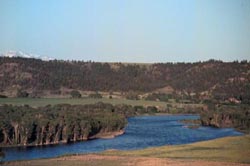
Yellowstone River was a major focus of Clark's part of the return journey in 1806, and historians today have clear details about how and why the captains split the Corps of Discovery.
Yellowstone River. On the way home in 1806, the captains decided to divide the Corps at Travelers' Rest so they could explore more country and fill in blank spots on their maps. Meriwether Lewis took one group north and east to explore the Marias River and then rejoin the main Missouri, while William Clark led another group south and east toward the Yellowstone River. Clark's party crossed the mountains and river valleys of today's southwestern Montana, reached the Yellowstone near present-day Livingston, and then followed the river downstream in canoes and bull boats to its meeting place with the Missouri in what is now North Dakota. The captains planned to meet where the two rivers come together, a distance of roughly 400-450 river miles from where Clark first reached the Yellowstone, and they successfully reunited near the mouth of the Yellowstone in August 1806. Clark and his men are generally recognized as the first documented Euro-American party to travel the length of the lower Yellowstone River, though later fur trappers like John Colter went on to explore the high country that would someday become Yellowstone National Park.