

21. Pompeys Pillar
Updated: March 3, 2026
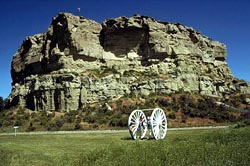
Pompeys Pillar. As William Clark traveled down the Yellowstone River on the return journey in July 1806, he enjoyed the wide valley and striking rock formations he saw along the way. Near today's town of Pompeys Pillar, Montana, he stopped at a tall sandstone butte that he called "Pompy's Tower," using the nickname "Pomp" or "Little Pomp" that he had given to Sacagawea and Toussaint Charbonneau's baby son, Jean Baptiste. On July 25, 1806, Clark climbed the rock and carved his name and the date into the soft stone, creating the only remaining place on the trail where we can still see a member of the Corps of Discovery's original signature on the landscape. The sandstone pillar, now about 120-150 feet high above the Yellowstone River, also holds many Native American petroglyphs and has been used as a landmark and gathering place by Indigenous peoples for thousands of years.