

Crow Indian Reservation
Updated: February 26, 2026
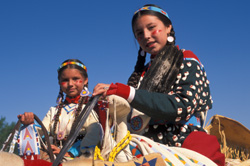
The Crow Reservation is in south-central Montana, bordered by Wyoming to the south. Its northwest boundary lies only about ten miles from Billings, Montana's largest city. The reservation includes about 2.2 million acres (over 3,400 square miles) of river valleys, benchlands, and plains along the Bighorn, Little Bighorn, and Pryor Creek drainages.
The Crow Tribe today has roughly 11,000-14,000 enrolled members, and about 7,900 people live on the reservation itself, with many more living in nearby Montana and Wyoming communities. Crow (Apsáalooke) is still widely spoken and is one of the stronger Indigenous languages in the region, but the share of members who speak it as a first language has declined in younger generations, so schools and families are working hard to keep it strong.
Coal, farming, and ranching remain key parts of the reservation economy. The eastern part of Crow Country overlies large coal deposits, and coal development-through tribally controlled agreements and off-reservation holdings-provides important royalty income, jobs, and political debates about land, water, and climate. Much of the land is used for irrigated and dryland farming and for grazing cattle and horses, continuing an agricultural way of life that Crow families have maintained for generations. Tribal programs also support bison restoration and locally grown food, echoing older relationships between the Apsáalooke people and the animals and plants of the prairie.
Crow Agency, near the confluence of the Little Bighorn River and Interstate 90, is the tribal headquarters and the primary service center on the reservation. It is home to Little Big Horn College, a tribally controlled community college that offers associate degrees in fields such as Business Administration, Crow Studies, Education, Human Services, Liberal Arts, Information Systems, Mathematics, and Science, along with community education, farming and ranching workshops, and cultural programs.
Points of Interest
- Bighorn Canyon National Recreation Area
- Little Bighorn Battlefield National Monument
- Reno-Benteen Battlefield and trail area
- Chief Plenty Coups State Park
- Yellowtail Dam and Bighorn Lake
Events
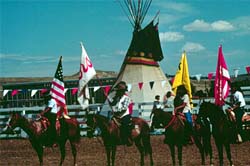
Crow Native Days, held in June, and Crow Fair & Rodeo, held in mid-August, are two of the biggest public celebrations in Crow Country. Crow Fair, often called the "Teepee Capital of the World," turns the valley around Crow Agency into one of the largest tipi encampments anywhere, with thousands of lodges, a large powwow, all-Indian rodeos, Indian relay horse races, parades, and family gatherings that draw visitors from across North America. These events are open to the public, and guests are welcome to attend respectfully, follow arena rules, and learn about Apsáalooke culture.
History and Culture
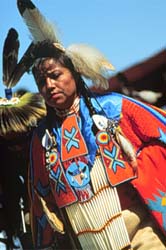
The Crow call themselves Apsáalooke, often translated as "children of the large-beaked bird," which early translators rendered as "Crow." The people's older homelands were farther east, in the upper Midwest and along the Missouri headwaters, but by the 1600s and 1700s, Crow bands had moved west through what is now North Dakota into the Yellowstone and Bighorn country of present-day Montana and Wyoming. As they moved onto the plains and acquired horses, they shifted from river-valley farming to a buffalo-hunting, horse-centered life, building strong reputations as horse breeders and traders.
In 1806, William Clark of the Lewis and Clark Expedition spent several weeks in Crow Country and reported friendly relations; later, many fur traders and U.S. officials also relied on Crow knowledge of the land. Despite these alliances, the tribe suffered heavily from smallpox and other diseases introduced by outsiders; epidemics in the 18th and 19th centuries cut Crow numbers by a large share and reshaped their communities.
As the 1800s went on, the buffalo herds that sustained Plains peoples were driven nearly to extinction, and waves of settlers, railroads, and miners pushed into Crow homelands. Even though the Apsáalooke often maintained relatively cooperative relations with the U.S. government and served as scouts-six Crow scouts rode with Custer's command during the 1876 Little Bighorn campaign-the tribe still lost most of its territory through a series of treaties and congressional acts. The reservation boundaries were reduced several times in the late 19th century and were largely fixed by the early 1900s, leaving a fraction of the original Crow lands.
Today, the Crow Tribe continues to balance farming, ranching, energy development, and tourism with language revitalization, cultural education, and efforts to strengthen tribal sovereignty and community health. Many Apsáalooke people see this as a continuation of their ancestors' traditions of adaptation, trade, and resilience along the valleys of the Yellowstone, Bighorn, and Little Bighorn rivers.
Test your knowledge. Take the Crow quiz.
For more information about the Crow Reservation contact:
Crow Reservation
PO Box 159
Crow Agency, MT 59022
406-679-1568
Website: VisitMT - Crow Reservation