

Wool
Updated: February 22, 2026
Wool is still one of Montana's signature livestock products, and the state remains among the top U.S. producers of fine wool, though output is lower than it was a decade ago. In 2024, Montana sheep and lambs produced about 1.37-1.38 million pounds of greasy wool, placing the state in the national top ten for total wool production and among the leaders for wool quality and price per pound.
What wool is and why it keeps you warm
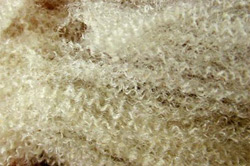
Wool is the fuzzy fiber that grows on sheep and some related animals. Each wool fiber has a natural crimp (wave) and is elastic, so it can be stretched and bent many times without breaking, which helps wool fabrics trap pockets of air and hold in body heat. Wool can absorb water vapor inside the fiber while still feeling relatively dry on the surface, so it keeps sheep - and people wearing wool sweaters, scarves, and mittens - warm even in cold, damp weather.
How much wool Montana produces now
Montana no longer produces "more than 4 million pounds of wool a year," but it is still a major wool state. Recent data show:
- - In 2022 Montana produced about 1.40-1.49 million pounds of wool.
- - In 2023 Montana's wool clip was about 1.36-1.38 million pounds, with a reported value around 2.7-2.8 million dollars, and the state ranked near the top nationally in average wool price per pound.
- - In 2024, American Sheep Industry "Fast Facts" list Montana at about 160,000 sheep and lambs shorn, producing roughly 1.37 million pounds of wool, with an average fleece weight of about 8.6 pounds.
With just over 1.1 million residents, this is still enough wool to knit hundreds of thousands of sweaters and other garments for people in Montana.
From sheep to sweater: modern wool processing
The basic steps from "sheep to sweater" are still the same, even though much of the work is now mechanized.
1. Shearing
- - Sheep are rounded up and shorn, usually once a year in late winter or spring, using electric clippers to remove the fleece in one piece.
- - The single piece of wool taken off each sheep is called a fleece; fleeces are skirted (dirty edges removed), sorted, and baled.
2. Scouring and carding
- - Scouring uses hot water and detergents to wash out dirt, sweat (suint), and most of the natural wool grease (lanolin).
- - Carding pulls the clean fibers through fine wires or combs, aligning them and making them soft, smooth, and ready to spin.
3. Spinning, dyeing, and knitting or weaving
- - Carded wool is spun into yarn in mills using large machines or, in small-scale operations, on spinning wheels.
- - Mills or hand-dyers then add color, and the yarn is knitted or woven into sweaters, scarves, mittens, blankets, and many other woolen goods, which are shipped to stores or sold directly by brands and small Montana wool companies.
Beyond clothing, modern manufacturers use wool in carpets, upholstery, technical textiles, and insulation because it resists flames, absorbs sound, and naturally sheds dirt.
Lanolin and other wool by-products
Lanolin is the natural oil (grease) found in raw wool, removed during scouring. After refining, lanolin and its derivatives are used in hand creams, lip balms, ointments, and some industrial products because they help protect and moisturize skin. Fine wool from Montana and other Western states also goes into high-performance outdoor clothing, uniform fabrics, and specialty yarns, adding value beyond basic commodity markets.
Other "wool" animals
Sheep are still the main source of wool fiber, but they are not the only animals that grow spinnable coats. Other fiber animals include:
- - Angora goats, which produce mohair
- - Angora rabbits, which produce Angora fiber
- - Llamas and alpacas, which produce long, soft fibers often called llama or alpaca "wool" even though they are technically hair
These fibers can be blended with sheep's wool to make warm, lightweight garments that help keep you cozy on those long Montana sledding days.
-
Sources:
- USDA SHEEP, LAMB, AND GOAT INVENTORY JANUARY 1, 2024
- Agricultural Marketing Resource Center
- Farm Flavor: Montana Wool Goes From Sheep to Shelf
- MONTANA AGRICULTURAL FACTS 2022
- Montana State University: Ask Steward - From Sheep to Sweater: The Story of Wool Processing
- American Sheep Industry Association: FAST FACTS ABOUT WOOL PRODUCTION
- USDA 2024 STATE AGRICULTURE OVERVIEW
- USDA Montana Sheep Production
Updated: January 26, 2026