

Hay
Updated: February 22, 2026
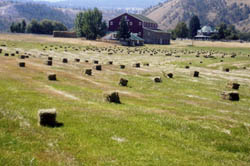
Hay is a key feed for cattle, horses, sheep, and other grazing livestock, and is made from the dried stems and leaves of forage plants. Common hay crops in Montana include alfalfa, grass–alfalfa mixtures, and other grasses such as clover and small grains cut for hay.
Montana is one of the nation's leading hay states, ranking near the top ten for total hay production and around third for alfalfa hay in recent years. In 2024, Montana farmers and ranchers produced about 4.8 million tons of all dry hay, including roughly 3.2 million tons of alfalfa and alfalfa-mixture hay from about 1.5 million harvested acres. Alfalfa and alfalfa-grass mixtures make up the majority of the state's hay output and are valued for their high nutrient and energy content.
Alfalfa stands are typically kept in production for several years before reseeding, and much of Montana's alfalfa is irrigated where water is available, especially in drier regions. Both alfalfa and grass hay may be irrigated starting in late spring, using systems that range from traditional flood irrigation from ditches to large moving sprinkler systems.
Central, southwest, and south-central Montana remain major hay-producing areas of the state, and most ranchers aim to grow enough hay to feed their own livestock through winter. Surplus hay is often sold to other producers in Montana or shipped to states facing forage shortages during drought years, continuing a long tradition of interstate hay shipments during hard times.
Modern haying still follows the same basic steps: cutting, drying in windrows, raking or fluffing if needed, and baling once the hay reaches safe moisture levels. Producers now rely heavily on large round or big square bales weighing up to about a ton, which are handled entirely by machines, while small square bales are still used where hand feeding and easy handling are important, such as for horses.
In Montana's climate, stored hay is crucial to carry cattle through the snowy months, often from late fall into spring, with animals typically consuming around 2 to 3 percent of their body weight in dry matter each day. This makes careful planning of acres, yields, storage, and feeding practices essential for ranch profitability and herd health.
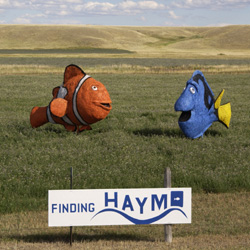
Each September, central Montana celebrates its hay heritage with the Montana Bale Trail "What the Hay" event, a widely known hay-bale-sculpture contest along the loop between Hobson and Windham with Utica at the center. Dozens of creative entries from local residents and visitors, including a separate kids' category, draw thousands of people to tour the sculptures, visit the small towns, and vote for their favorites.
- USDA 2024 STATE AGRICULTURE OVERVIEW
- USDA ANNUAL CROP SUMMARY – 2024
- Montana State University: Agriculture Remains a Strong Industry in Broadwater County