

William Clark
Updated: February 26, 2026
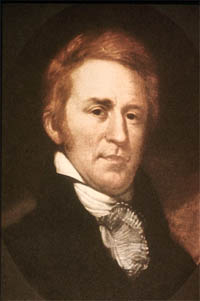
William Clark was about 33 years old when Meriwether Lewis invited him in 1803 to share command of the Corps of Discovery, and historians now emphasize that the two captains functioned as near equals in planning and leading the expedition, even though only Lewis held a formal U.S. Army commission as captain. Clark, four years older than Lewis, was born in Virginia in 1770 and grew up on the Kentucky frontier, where years of military service, surveying, and travel along western rivers gave him deep practical experience with wilderness travel and with some of the Indigenous nations living along the Ohio and Mississippi Valleys.
Compared with Lewis, Clark had less formal schooling, but he was a skilled woodsman, boatman, and mapmaker whose talents were crucial to the journey's success. He had previously commanded Lewis during campaigns in the Northwest Indian War of the 1790s, and by the time the expedition left Camp Dubois in May 1804 he was responsible for supervising the enlisted men, managing daily camp routines, and overseeing navigation and boat handling on the Missouri River. Clark's careful field sketches and measurements later formed the backbone of the expedition's famous map of the West, which helped guide traders, soldiers, and settlers for decades.
Surviving journals and letters show that Lewis and Clark had different personalities that complemented one another in the field. Lewis, intense and intellectually driven, focused heavily on scientific observation and diplomacy, while Clark's more even-tempered, practical style helped maintain discipline and morale among the men and built rapport with many Native leaders. The captains referred to each other as "Captain" in front of the Corps and Indigenous communities, reinforcing the sense of joint command, and there is no record in their journals of serious conflict between them, despite the stress of the long journey.
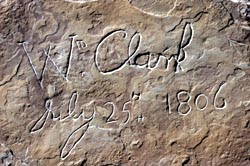
After the expedition, Clark settled in St. Louis, where he quickly became one of the most influential U.S. officials in the trans-Mississippi West. He served as brigadier general of the territorial militia and governor of the Missouri Territory from 1813 to 1820, then, in 1822, President James Monroe appointed him superintendent of Indian affairs at St. Louis, a position he held until shortly before his death in 1838. In that role Clark issued licenses to traders, negotiated and signed dozens of treaties, supervised treaty annuity payments, and oversaw the survey and enforcement of new boundaries, making him a central figure in U.S. expansion and in the early phases of federal Indian removal policy west of the Mississippi.
Many Native leaders regarded Clark as an accessible and sometimes sympathetic intermediary, and his long red hair helped inspire nicknames that translate roughly as "red-headed chief," but current scholarship also stresses that his work advanced U.S. goals that dispossessed tribes of land and autonomy. Clark's household and career were embedded in a slaveholding society-he owned enslaved people, including York, who had traveled with the Corps of Discovery yet was kept in bondage after the expedition-highlighting the contradictions between his reputation as a trusted negotiator with Indigenous nations and his participation in systems of enslavement and removal. Clark married Julia Hancock (often noted as Judith or Julia in older accounts) in 1808, named their first son Meriwether Lewis Clark in honor of his friend, and died of natural causes in St. Louis on September 1, 1838, at age 68, leaving a legacy that historians now view as both foundational to early U.S. western exploration and deeply entwined with the inequities of American expansion.