

Beef
Updated: February 22, 2026
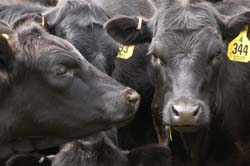
In the United States, the average person consumes a little under 60 pounds of beef per year at the retail level, and closer to about 40-45 pounds when adjusted for cooking loss, plate waste, and other losses. Commercial beef cattle are raised for meat rather than milk, and may spend part or all of their lives grazing on pasture before some are finished in large feeding operations called feedlots, where they are typically fed rations based on grain and other concentrates.
There are many different cuts of beef. In general, the closer a cut comes from the middle of the animal's back and the farther it is from the hooves and horns, the more tender the meat tends to be, while cuts from the shoulder and leg are usually tougher and better suited to slow, moist cooking.
-
Cuts of Beef
- Chuck - Hamburger, roasts, stews
- Rib - Short ribs, ribeye steak
- Short Loin - T-bone and porterhouse steaks, strip steak, filet mignon (among the tenderest cuts)
- Sirloin - Sirloin and top sirloin steaks
- Round - Round steak, roasts (typically lean and fairly firm)
- Brisket - Barbecue beef brisket, corned beef
- Shank - Stews and soups (one of the toughest cuts, usually braised)
- Plate - Skirt steak, often used for fajitas
- Flank - Flank steak, often used for "London broil"-style dishes
Higher-value cuts in the modern beef industry are most commonly produced from steers (castrated males), while many heifers (females) are kept for breeding and milk production in dairy systems. Older cows and bulls that are past their reproductive or productive prime are also harvested; their meat is generally tougher and is used mainly for ground beef and processed products.
In addition to different cuts, there are also official United States Department of Agriculture (USDA) quality grades for beef. The USDA Agricultural Marketing Service currently recognizes eight quality grades, from highest to lowest: Prime, Choice, Select, Standard, Commercial, Utility, Cutter, and Canner. Beef that is voluntarily graded and sold at the retail level is almost always Prime, Choice, or Select, and most packages in supermarkets are Choice or Select; Standard and Commercial beef is often sold as "ungraded" or store-brand meat, while Utility, Cutter, and Canner grades are rarely sold as fresh cuts and instead are used for ground beef and processed products such as canned meat or hot dogs.
-
SOURCES
- [insideanimalag]
- [renub]
-
[ams.usda] - [bbqguys]