

Timber and Logging
Updated: February 22, 2026
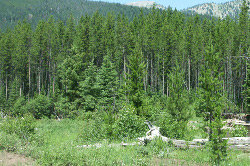
What Do You Think Of When You Hear "Timber"?
What about "logging"? Do you think of forest fires? Chopping axes? The Forest Service? Quaint log cabins? Sparkling Christmas trees? A burly bearded logger wielding a chainsaw and yelling "TIIMMMBBERR"?
"Timber" is a noun - the wood of growing trees suitable for structural uses, wooded land, or wood adapted for building purposes.
"Logging" is the process of cutting down trees and transporting logs to sawmills.
Christmas Trees
The Christmas tree industry has shifted dramatically in recent decades. As of the latest U.S. Forest Service and USDA data:
Recreational Christmas tree permits in Montana's national forests climbed from 21,550 in 2016 to 28,878 in 2024 - a 34% increase - as more locals harvest trees for their own use.
These figures cover the seven national forests primarily in Montana (Beaverhead-Deerlodge, Bitterroot, Flathead, Custer Gallatin, Helena-Lewis & Clark, Kootenai, and Lolo) and **do not include private land tree farms or unpermitted harvests. ([NonStop Local Montana][3]) Commercial Christmas tree farming in Montana has declined sharply compared with historical highs; for example, 6,338 cultivated Christmas trees were harvested in 2022 according to USDA Ag Census data.

More Products Than You'd Expect
According to Montana's forestry agencies, wood and forest products are part of thousands of everyday items - from paper, homes, and furniture to rayon, shoe polish, aspirin, plastics, toothpastes, and more. Forest products also support sustainable materials in industries like construction and renewable energy.
Montana Timber Harvest
Timber harvest levels in Montana have changed over time:
Historically, Montana harvested over a billion board feet per year at its peak. Recent data (2020-2024) shows annual harvest volumes generally around 300-400 million board feet, varying by ownership type (private, state, federal).
Forest Products Industry Today
Montana's forest products industry is a significant sector of the state economy:
The industry supports over 10,000 jobs and provides hundreds of millions in annual wages.
Forest products are very important for local jobs, rural economies, and keeping our forests healthy - the wood generated from thinning projects can save money and helps reduce wildfire risk.
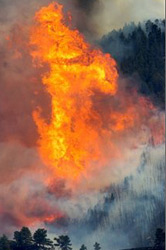
Wildfire, historically, played a natural role in western North American forests - clearing undergrowth, recycling nutrients, and helping certain species regenerate. Modern fire suppression over the past century altered these natural cycles, allowing fuel loads like dead wood and brush to build up, increasing wildfire intensity and risk in many areas.
Today's approach emphasizes responsible forest management, including:
Prescribed fire, Fuels reduction, Commercial and selective logging, Active thinning projects. These strategies aim to restore natural forest structures, protect communities, and sustain timber supplies - balancing ecology and economy.
Did you know?
The first known sawmill in Montana was built by Jesuit Father Anthony Ravalli in 1845 near present-day Stevensville.
Want More Information?
For authoritative resources on forests, timber, and conservation:
U.S. Department of Agriculture, Natural Resources Conservation Service: https://www.nrcs.usda.gov
Montana DNRC Forest Products: https://dnrc.mt.gov/forestry/Forest-Products
U.S. Forest Service National Forest System Data: https://www.fs.usda.gov/managing-land/forest-management/products/cut-sold