

Dairy
Updated: February 22, 2026
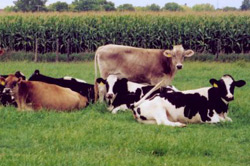
The dairy industry remains an important part of Montana agriculture, providing much of the milk and dairy products consumed in the state and contributing to local jobs and farm income. Montana has followed national trends of consolidation in dairy farming, with the number of licensed dairies declining over the past decade while the average herd size has increased; by Fiscal Year 2024, the average licensed Montana dairy milked about 205 cows, up from about 173 cows per dairy in 2015. Recent state reports and industry summaries indicate that Montana now has only a few dozen licensed commercial dairies rather than the roughly 75 producers reported in 2020, and total milk cow numbers are on the order of several thousand head (about 8,500 cows mentioned in a 2024 summary), reflecting this consolidation.
Dairy operations in Montana are still diverse in their management practices, ranging from smaller family-run herds to larger farms with a few hundred cows, and they are spread around the state near communities and feed sources. Milk for public consumption is collected at the farm and shipped to major processing plants, where it is pasteurized, tested for safety and quality, and made into a variety of products before being distributed to grocery stores and other retailers. Industry articles now describe three primary fluid milk processing plants serving Montana: a Darigold plant in Bozeman and Meadow Gold plants in Great Falls and Billings; older references listed four plants, including Deer Lodge, but recent industry coverage highlights these three main facilities. As in the past, Montana milk and dairy products may move across state lines: in some years Montana exports more packaged and bulk milk than it imports, while in other years increased demand for out‑of‑state Class I milk products leads to more dairy products coming into Montana from neighboring states.

Livingston Montana
Montana's milk continues to be classified into three federal milk marketing classes: Class I, Class II, and Class III. Class I milk products include beverage milks such as the white milk people drink daily, along with buttermilk, chocolate milk, and other fluid milk drinks. Class II products include soft dairy items like cottage cheese, sour cream, yogurt, ice cream and frozen dessert mixes, and seasonal products such as egg nog. Class III milk is used mainly for hard cheese, cream cheese, and butter, and in Montana the volume of Class II and III products remains smaller than the volume of Class I fluid milk sold, though consumption of fluid milk has been slowly declining while processed and cheese products hold steady or grow.
Montana dairy farmers are still paid for their milk by the hundredweight, meaning for each 100 pounds of milk they ship into the state's pool they receive a price that reflects how that milk was used across Class I, II, and III products. The Montana Board of Milk Control and its market administrator oversee a pooling and pricing system that blends returns from different classes so that participating producers receive a relatively uniform price per hundredweight, adjusted for components like butterfat and protein. In recent fiscal years, Montana has experienced modest declines in total pooled Class I consumption and increased competition from out‑of‑state packaged milk, but the pool marketing system has helped keep in‑state producer prices relatively stable compared to the more volatile national market. Scientists today continue to use biotechnology to explore ways dairy cattle might help produce substances useful in medicine and nutrition. One area of research involves "transgenic" or gene‑edited cattle that can produce specific human proteins or enzymes in their milk, which could then be purified and used to treat diseases, including hormone and enzyme deficiencies such as diabetes that currently rely on manufactured insulin and other biologic drugs. While such applications remain tightly regulated and are not part of everyday milk in the grocery store, this kind of research aims to make treatments more compatible with the human body and potentially more effective for people with serious illnesses.
-
SOURCES
- Montana Board of Milk Control Fiscal Year 2024 Report
- Montana Board of Milk Control Fiscal Year 2023 Report
- USDA Milk Production Report
- USDA Daily Market News